
Symptoms of Hypothyroidism
Understand the connection between cellular energy, thyroid function, and symptoms. Learn how hypothyroidism and Hashimoto’s affect your body.
Thyroid function and metabolism
Could low thyroid function explain your symptoms?
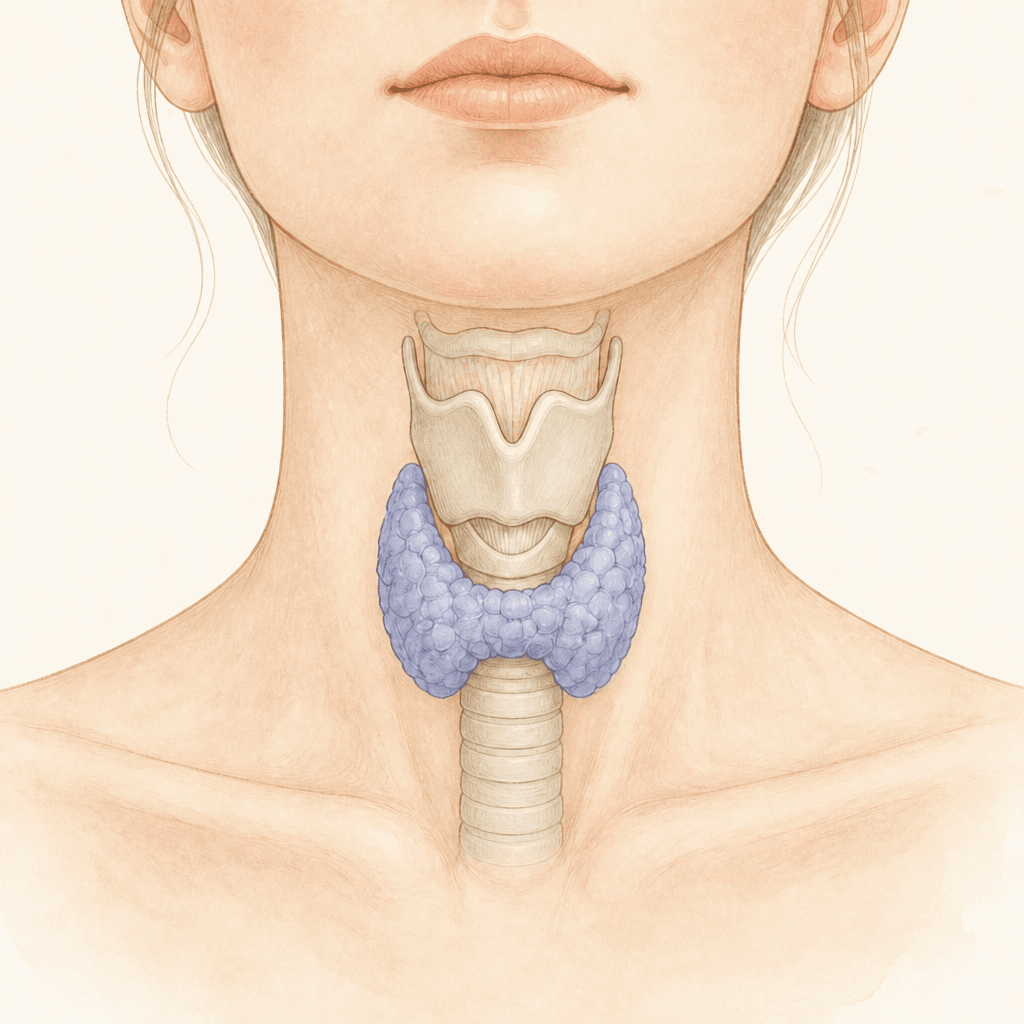
Dr. Ray Peat’s Bioenergetic Framework emphasizes that optimal thyroid function is a cornerstone of cellular health and, by extension, overall health.
He argued that many people experience a range of symptoms without realizing that underactive or low thyroid function is the root cause.
The thyroid gland is a small, butterfly-shaped gland at the front of the neck. It produces the hormones T4 and T3. T4 is a storage hormone that can be converted into T3 when needed. T3 is the active thyroid hormone that controls the body’s energy production by regulating metabolic rate—how quickly the body converts food into energy.
Low thyroid function is also called hypothyroidism. Hashimoto’s thyroiditis is an autoimmune thyroid disease that can lead to hypothyroidism. With low thyroid function, metabolic rate slows and the body’s cells produce less energy. This can affect how tissues and organs function and lead to a range of symptoms. Symptoms of low thyroid function often vary from person to person and may be diffuse. However, there are common signs and symptoms associated with the condition. See the list below.
Common signs to explore
Symptoms of Low Thyroid Function
Below are common symptoms of hypothyroidism (low thyroid function). They may also occur when Hashimoto’s thyroiditis leads to hypothyroidism. You do not need to experience all of them to have a thyroid issue. People with low thyroid function often have only some of these symptoms.
01Fatigue
Feeling constantly tired and low on energy, even after enough rest. Chronic fatigue syndrome is also included.
02Headaches
Pressure headaches and migraines.
03Hypoglycemia
Low blood sugar, which may mean needing to eat often to avoid dizziness or fainting.
04Changes in weight
Unexplained weight gain or difficulty losing weight despite a healthy diet and regular exercise; some people may experience unexpected weight loss.
05Low body temperature
Feeling unusually cold, even in warm surroundings, with cold hands and feet.
06Low or high heart rate
A slow heartbeat is common, while some people may also experience a high pulse.
07Heart problems and disease
Reduced heart function and concerns such as heart pain, poor heart sounds, heart enlargement, palpitations, and hypertension.
08High cholesterol
Cholesterol levels may rise when the body does not have enough active T3.
09Digestive issues
Constipation is prevalent, along with painful digestion, irritable bowel syndrome (IBS), and overgrowth of harmful bacteria or candida.
10Skin problems
Dry, rough, thin, or pale skin that may be itchy or scaly, along with eczema and skin infections.
11Brittle hair and nails
Hair loss, changes in hair texture, brittle nails, or loss of the outer third of the eyebrows.
12Muscle and joint pain
Unexplained muscle aches, stiffness, or joint pain not related to a specific injury or activity.
13Carpal tunnel syndrome
Pain, numbness, or tingling in the hands, arms, or fingers.
14Mood changes
Depression, anxiety, irritability, or mood swings.
15Cognitive impairment
Difficulty concentrating, poor memory, or reduced mental clarity (“brain fog”).
16Hoarseness
A deeper or hoarse voice, often accompanied by a sore throat.
17Swelling
Fluid retention (edema), with puffiness or swelling in the face, hands, feet, legs, or ankles.
18Decreased libido
Reduced sexual interest or drive.
19Menstrual irregularities
Irregular cycles, heavy or prolonged bleeding, painful menstruation, and symptoms related to PMS or polycystic ovarian syndrome (PCOS).
20Infertility and miscarriage
Challenges with conceiving and a higher chance of miscarriage in women.
21Insomnia
Problems falling asleep or staying asleep during the night.
22Other symptoms
Vision impairment, hearing loss, anemia, allergies, frequent colds and infections, orange-colored calluses, inflammation, premature aging, and more.
Explore these topics in my books
 How I Overcame HypothyroidismDr. Ray Peat’s Principles for Metabolic and Hormonal Regeneration
 Test Your Thyroid FunctionDr. Ray Peat’s Guide to Track Your Metabolism and Detect Hypothyroidism
 How to Boost Metabolism with FoodThe Ray Peat Diet for Thyroid Health and Fast Metabolism
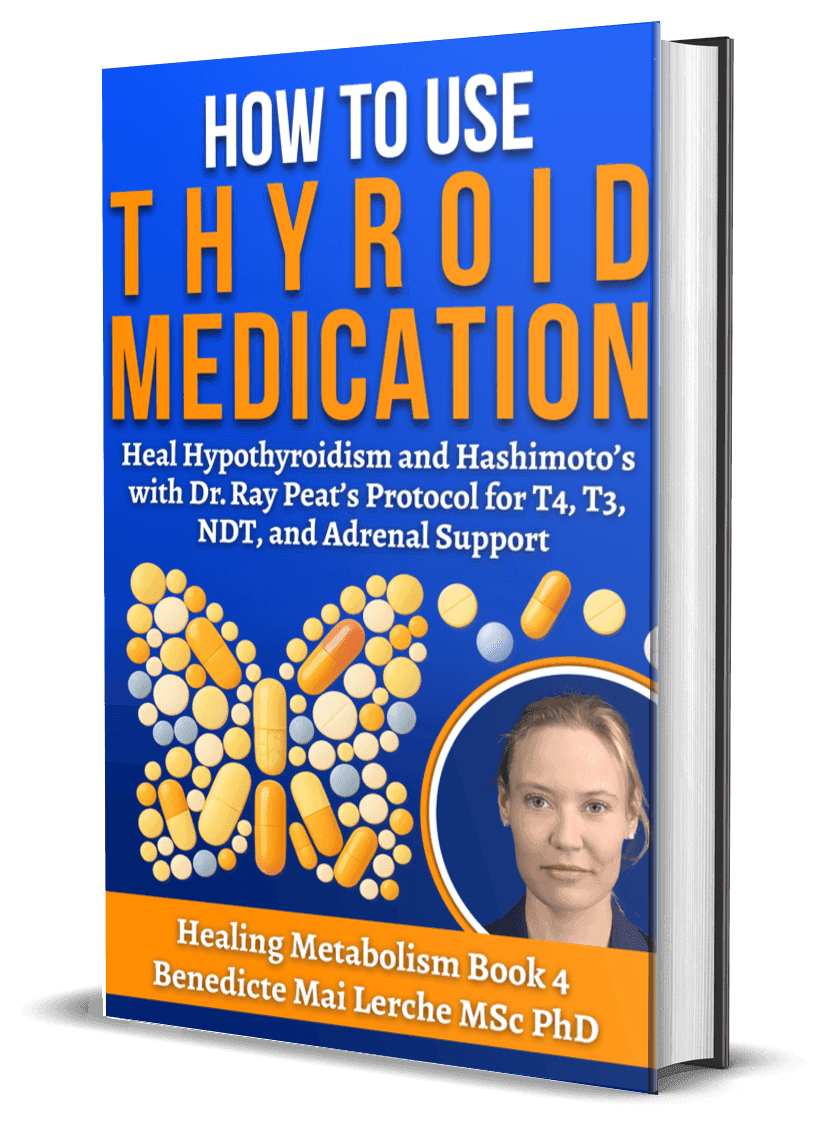 How to Use Thyroid MedicationHeal Hypothyroidism and Hashimoto’s with Dr. Ray Peat’s Protocol for T4, T3, NDT, and Adrenal Support
Browse the Healing Metabolism book series.